

-
−4%
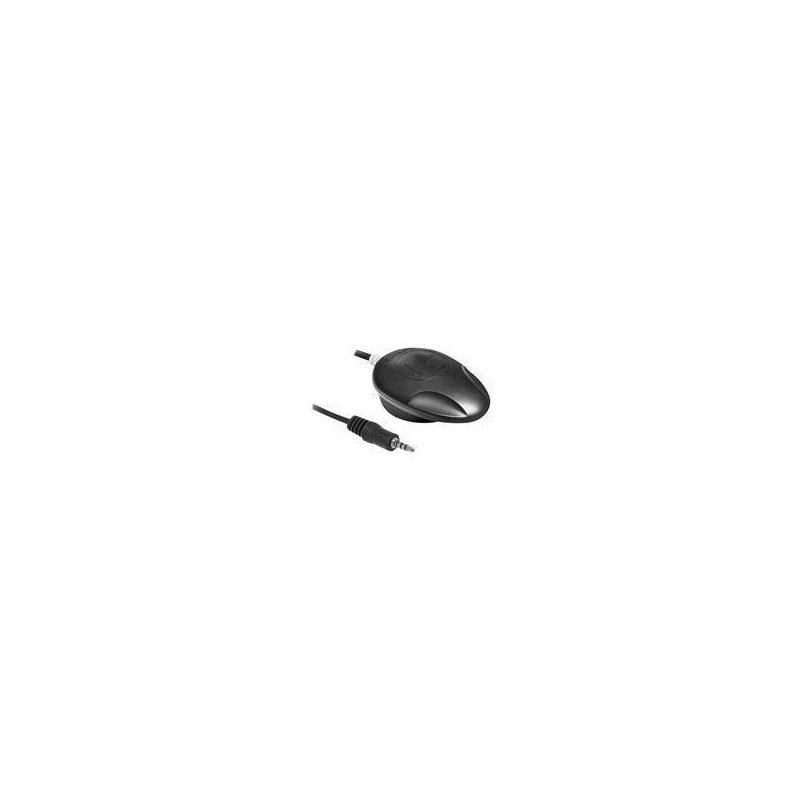

Black GNSS receiver with a built-in antenna, u-blox 8 chipset and approximately 5 m cable. Uses a four-pin 3.5 mm TRRS connector with an LVTTL (3.3 V) data interface and requires a 5 V DC supply. A magnetic non-slip base, IPX6 protection and GPS status LED simplify installation and use.
Black GNSS receiver with a built-in antenna, u-blox 8 chipset and approximately 5 m cable. Uses a four-pin 3.5 mm TRRS connector with an LVTTL (3.3 V) data interface and requires a 5 V DC supply. A magnetic non-slip base, IPX6 protection and GPS status LED simplify installation and use.
Guarantee
24 month
Delivery from Europe in
10 - 15
business days
The Navilock NL-8009T is an external satellite positioning receiver with a built-in antenna and u-blox 8 UBX-M8030-KT chipset. Manufacturer part number 62587 and EAN 4043619625871 identify the 5 m cable version. It supplies positioning data to compatible host equipment.


The receiver supports GPS, GLONASS, BeiDou, Galileo and QZSS signals and can receive signals from up to 72 satellites simultaneously. This provides more satellite signal options for determining position. For Galileo operation, the manufacturer specifies firmware version 3.01 or later and NMEA 0183 version 4.1 support.
Positioning data can be updated at up to 18 Hz with a single GNSS system or up to 10 Hz with multiple systems. Frequent updates are useful when monitoring a moving object and regularly receiving new measurements matters.
The manufacturer specifies positioning accuracy of 2.5 m CEP, improving to 2 m CEP with SBAS. CEP is a statistical accuracy measure, so these figures should not be treated as a guaranteed error limit for every measurement. WAAS, EGNOS, QZSS and MSAS assistance systems are supported, together with AssistNow online and offline operation.
A cold start takes approximately 26 seconds and a hot start approximately 1 second. A hot start allows positioning to resume more quickly when the receiver still retains the necessary previous data.
The four-pin 3.5 mm TRRS male connector carries data using LVTTL (3.3 V) signal levels. The power supply requirement is separate: 5 V DC. Supported NMEA 0183 messages include GGA, GSA, GSV, RMC and VTG, with automatic baud rate detection up to 115200 bps.
Before connecting, check the host equipment's pin assignments, supply voltage and signal levels. A physical 3.5 mm socket alone does not establish compatibility: this is a GNSS data interface, so an ordinary headphone or audio socket is not inherently suitable.
The approximately 5 m cable lets you position the receiver away from the connected equipment to find a more favourable location for satellite reception. Its magnetic non-slip base simplifies mounting on a suitable metal surface, while the GPS status LED helps you assess operating status.
The black PC / ABS housing has an IPX6 protection rating and is intended for indoor and outdoor use. IPX6 indicates resistance to powerful water jets, but does not establish suitability for immersion. The specified operating temperature range is −20 to +60 °C.
| Parameter | Value |
|---|---|
| Manufacturer and model | Navilock NL-8009T |
| Manufacturer part number / EAN | 62587 / 4043619625871 |
| Processor / chipset | u-blox 8 UBX-M8030-KT |
| Antenna | Built-in |
| Connector | Four-pin 3.5 mm TRRS male, LVTTL (3.3 V) |
| Power supply / maximum current | 5 V DC / 45 mA |
| GPS, Galileo and QZSS frequency | 1575.4200 MHz; GPS L1, Galileo E1, QZSS L1 |
| BeiDou frequency | B1, 1561.0980 MHz |
| GLONASS frequency band | L1 |
| Simultaneously received satellites | Up to 72 |
| Sensitivity | Down to −167 dBm |
| Update rate | Up to 18 Hz with a single GNSS system; up to 10 Hz with multiple systems |
| Positioning accuracy | 2.5 m CEP; 2 m CEP with SBAS |
| Cold / hot start | Approximately 26 s / approximately 1 s |
| Length | Approximately 5 m, including connectors |
| Dimensions as specified | Approximately 65 × 45 × 22 mm |
| Housing | Black, PC / ABS; magnetic non-slip base |
| Protection / operating temperature | IPX6 / −20 to +60 °C |
The manufacturer lists Windows Vista, Windows 7, Windows 8, Windows 8.1, Windows 10 and Linux kernel 2.6. A correctly wired, compatible 3.5 mm GNSS interface is required. The manufacturer does not provide a list of specific compatible device models.