




Nikon NIKKOR Z 135mm f/1.8 S Plena
20123
Nikon NIKKOR Z 135mm f/1.8 S Plena
20123
Guarantee
24 month
Delivery from Europe in
8 - 9
business days
Nikon NIKKOR Z 135mm f/1.8 S Plena
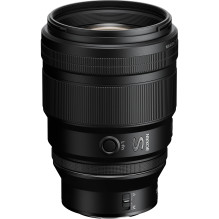
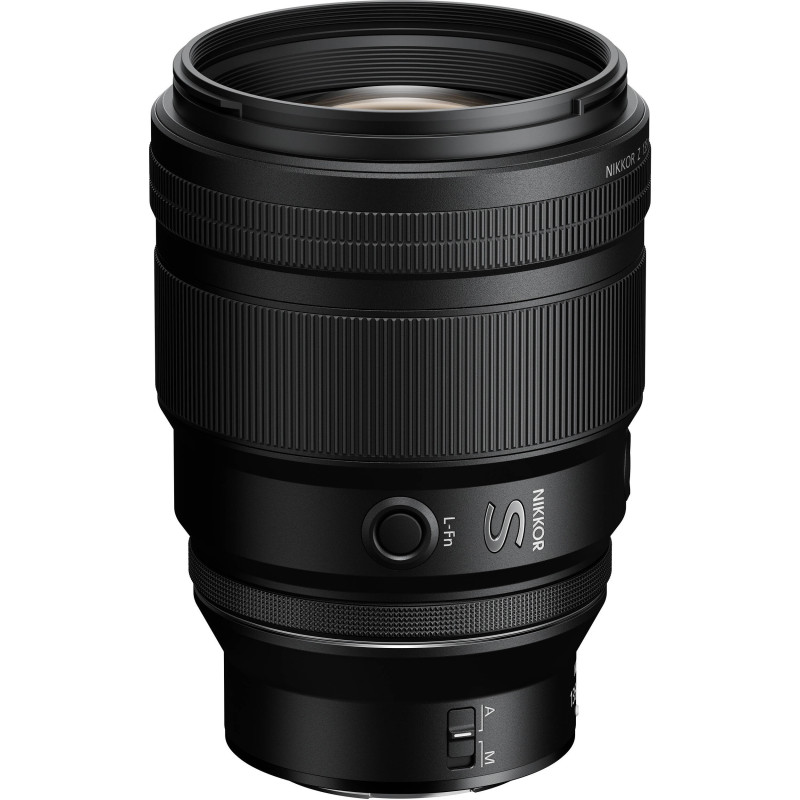
Every now and then, a lens comes along that changes everything. The NIKKOR Z 135mm f/1.8 S Plena delivers flawless bokeh and AF so fast you can try anything. Welcome to the thrill of perfection.
Take your artistry to the edge with the NIKKOR Z 135mm f/1.8 S Plena, a 135mm prime camera unlike any before. Stunning edge-to-edge clarity. Dreamy circular bokeh. A focal length for portraits, still lifes, cinema and landscapes. All with superb craftsmanship and performance optimized for wide-angle photography. Abundant. Abundant. Extraordinary. This is Plena
The NIKKOR Z 135mm f/1.8 S Plena's innovative design lets more light into the edges and corners of the frame throughout the entire aperture range - uniform brightness invites viewers to explore every inch of your work.
Wide open without a vignette.
With so much light reaching the corners of your frame, you won't need to reduce the aperture to avoid vignetting - it's already minimized by design.
A lens that only Nikon could create.
The ultra-wide diameter of the Nikon Z mount allows for a larger curved rear element that distributes light evenly across the full-frame image sensor.
Exceptional foreground and background bokeh.
Add dramatic drama and style to your photos and videos with a large, circular bokeh effect that spreads across the frame all the way to the edges.
Smooth, natural gradation.
Sharp details dissolve into dreamy spheres that gracefully envelop the focal plane.
Technology
Aspherical lens
A curved, non-spherical surface. Used to reduce aberrations and enable a more compact lens size. Aspherical lenses reduce coma and other types of lens aberrations, even when used at maximum aperture. They are particularly useful for correcting distortion in wide-angle lenses and help create a lighter, more compact design by reducing the number of standard (spherical) elements required. Aspherical lens elements correct these distortions by continuously varying the refractive index from the center of the lens.
ED (Extra-low Dispersion) glass
Nikon-developed optical glass used with conventional optical glass in telephoto lenses to optimally correct chromatic aberrations.
Short wavelength refractive lens
SR is a high-dispersion and specialized glass lens that refracts light at wavelengths shorter than blue. By controlling short-wavelength light, the lens can achieve highly accurate compensation for chromatic aberration, so that the colors of images are reproduced more accurately. It also allows for more flexible optical designs, which allows for the creation of compact, lighter lenses.
Meso Amorphous Coat
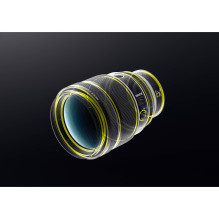
Meso Amorphous Coat* provides the highest anti-reflective performance in NIKKOR history. Meso Amorphous Coat provides an effect superior to Nano Crystal Coat for obliquely incident light, and an effect equivalent to or superior to ARNEO Coat for vertically incident light. The excellent performance significantly reduces ghosting and flare caused by incident light from various directions, ensuring clear images even in harsh conditions. * With this coating system, amorphous particles, which are even smaller than nanoparticles, are used to create even more gaps in the coating to form an ultra-fine mesoporous structure that achieves a lower refractive index. In addition, a higher-precision base layer is used to further enhance the reflection effect.
ARNEO coat
Nikon's proprietary anti-reflective coating is used in conjunction with Nano Crystal Coat to further reduce ghosting and flare caused by light entering the lens vertically, allowing images to be captured with exceptional clarity even when there is a light source in the frame.
Stepper motor
NIKKOR Z lenses use a stepping motor for fast, accurate, smooth, quiet autofocus and reduced shake. This silent drive system makes the lenses ideal for use in movies.
I AM
A/M stands for Auto Priority Manual mode. This mode also allows you to easily switch from autofocus to manual during AF operation. However, the sensitivity of the mode switch has been changed to reduce the possibility of accidentally switching to manual focus suddenly while shooting.
IF lens
A NIKKOR lens in which only the inner lens group moves during focusing. Thus, IF NIKKORS do not change size during AF, allowing the use of compact, lightweight lenses that can achieve closer focusing distances. These lenses will be marked with the abbreviation IF on the lens barrel.
Electromagnetic diaphragm mechanism
An electromagnetic diaphragm mechanism located in the lens barrel provides highly precise control of the electronic diaphragm or aperture blade when using automatic exposure during continuous shooting.