
-
−8%
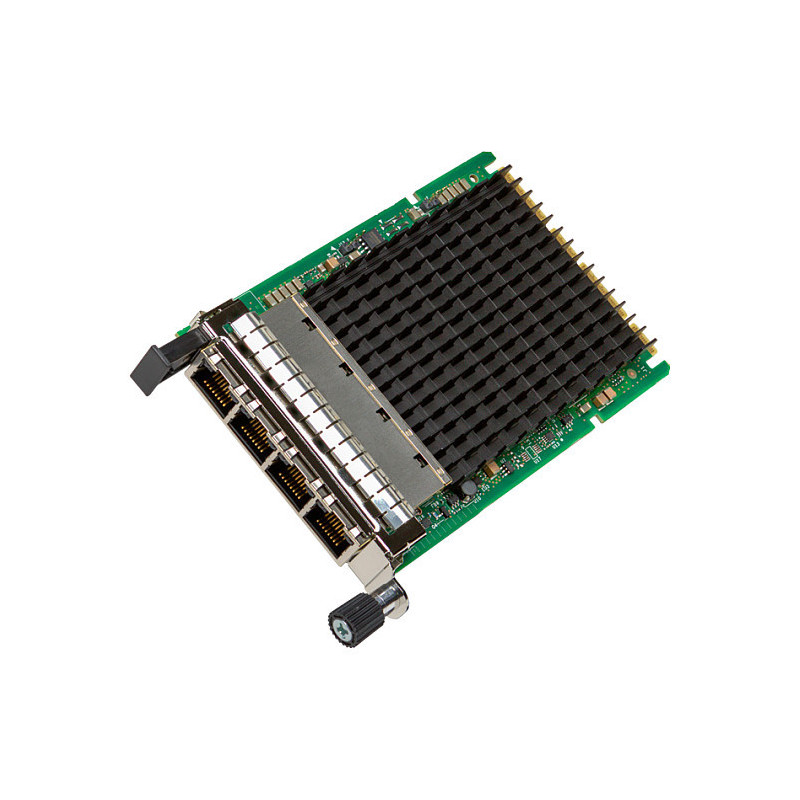


„Intel X710-T4L“ (OCP 3.0), vidinis, laidinis, PCI Express, Ethernet, 10000 Mbit/s
„Intel X710-T4L“ (OCP 3.0), vidinis, laidinis, PCI Express, Ethernet, 10000 Mbit/s
Garantija
24 mėn.
Pristatymas iš Europos
per 5 - 10*
d. d.
Intel X710-T4L (OCP 3.0). Internal. Connectivity technology: Wired, Host interface: PCI Express, Interface: Ethernet. Maximum data transfer rate: 10000 Mbit/s
iWARP/RDMA
iWARP delivers converged, low-latency fabric services to data centers through Remote Direct Memory Access (RDMA) over Ethernet. The key iWARP components that deliver low-latency are Kernel Bypass, Direct Data Placement, and Transport Acceleration.
Intel® Data Direct I/O Technology
Intel® Data Direct I/O Technology is a platform technology that improves I/O data processing efficiency for data delivery and data consumption from I/O devices. With Intel DDIO, Intel® Server Adapters and controllers talk directly to the processor cache without a detour via system memory, reducing latency, increasing system I/O bandwidth, and reducing power consumption.
PCI-SIG* SR-IOV Capable
Single-Root I/O Virtualization (SR-IOV) involves natively (directly) sharing a single I/O resource between multiple virtual machines. SR-IOV provides a mechanism by which a Single Root Function (for example a single Ethernet Port) can appear to be multiple separate physical devices.
Flexible Port Partitioning
Flexible Port Partitioning (FPP) technology utilizes industry standard PCI SIG SR-IOV to efficiently divide your physical Ethernet device into multiple virtual devices, providing Quality of Service by ensuring each process is assigned to a Virtual Function and is provided a fair share of the bandwidth.
Virtual Machine Device Queues (VMDq)
Virtual Machine Device Queues (VMDq) is a technology designed to offload some of the switching done in the VMM (Virtual Machine Monitor) to networking hardware specifically designed for this function. VMDq drastically reduces overhead associated with I/O switching in the VMM which greatly improves throughput and overall system performance
Connectivity technology: Wired
Host interface: PCI Express
Interface: Ethernet
Ethernet LAN (RJ-45) ports: 4
PCI version: 3.0
Maximum data transfer rate: 10000 Mbit/s
Networking standards: IEEE 1588, IEEE 802.1as, IEEE 802.3az
Feature: Ethernet LAN
Ethernet interface type: 2.5 Gigabit Ethernet, 5 Gigabit Ethernet, 10 Gigabit Ethernet, Fast Ethernet, Gigabit Ethernet
Maximum operating distance: 100 m
LAN controller: Intel X710-TM4
Component for: Server
Feature: Internal
Storage temperature (T-T): -40 - 70 °C
Feature: Intel Virtual Machine Device Queues (VMDq)
Feature: PCI-SIG* SR-IOV Capable
Feature: On-chip QoS and Traffic Management
Feature: Intel Flexible Port Partitioning
Speed & slot width: 8.0 GT/s, x8 Lane
Feature: Intelligent Offloads
Feature: Intel Data Direct I/O Technology
Feature: Intel Virtualization Technology for Connectivity (VT-c)
Bracket height: OCP 3.0
| Gamintojo kodas | X710T4LOCPV3G1P |
| Weight | 0.14 kg |