


- Prekė sandėlyje
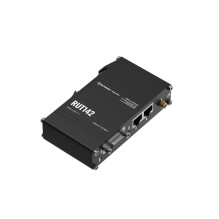
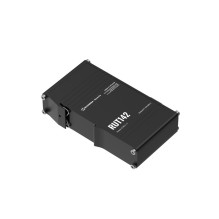
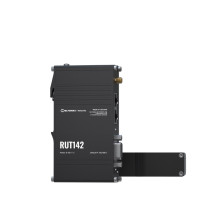


TELTONIKA RS232 pramoninis Ethernet Wi-Fi 4 maršrutizatorius
TELTONIKA RS232 pramoninis Ethernet Wi-Fi 4 maršrutizatorius
Garantija
12 mėn.
Pristatymas iš Lietuvos
per 2 - 3*
d. d.
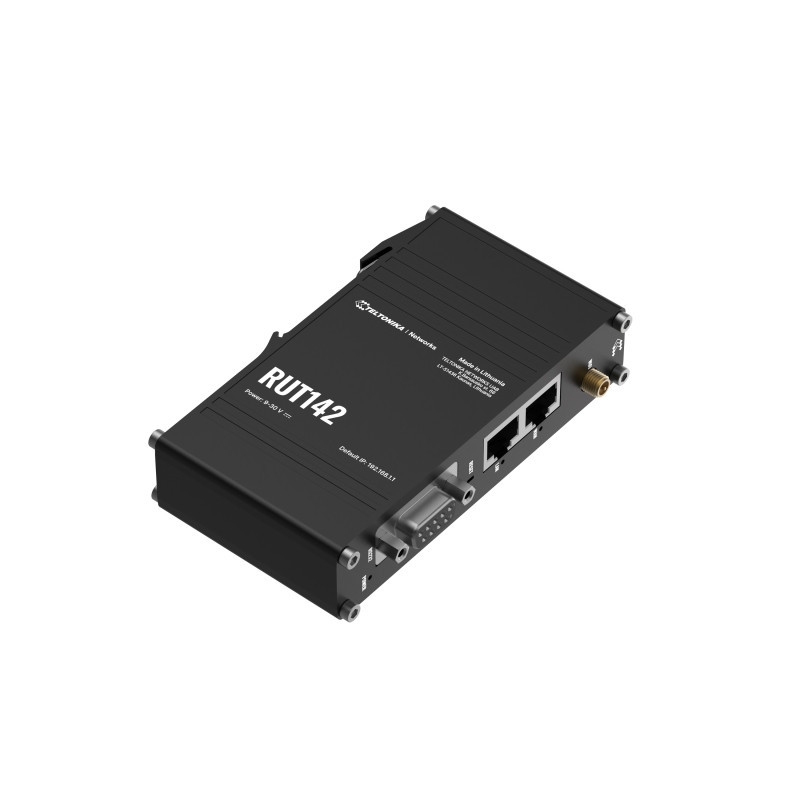
The RUT142 is a compact industrial Ethernet router, enhancing security through network isolation for end devices. Equipped with the RS232 serial interface, two Ethernet ports, DIN rail bracket, and an industrial 3-pin connector, it ensures seamless connectivity and easy installation. The router comes with RutOS, Wi-Fi 4, and supports industrial protocols such as Modbus, DLMS, DNP3, and OPC UA, and is compatible with RMS for efficient remote and on-site management.
WirelessWireless mode: IEEE 802.11b/g/n, Access Point (AP), Station (STA)
Wi-Fi security: WPA2-Enterprise - PEAP, WPA2-PSK, WPA-EAP, WPA-PSK, WPA3-SAE, WPA3-EAP, OWE; AES-CCMP, TKIP, Auto-cipher modes, client separation, EAP-TLS with PKCS#12 certificates, disable auto-reconnect
SSID/ESSID: ESSID stealth mode
Wi-Fi users: Up to 50 simultaneous connections
Wireless Connectivity Features: Wireless mesh (802.11s), fast roaming (802.11r), Relayd, BSS transition management (802.11v), radio resource measurement (802.11k)
Wireless MAC filter: Whitelist, blacklist
Wireless QR code generator: Once scanned, a user will automatically enter your network without needing to input login information
EthernetWAN: 1 x WAN port 10/100 Mbps, compliance with IEEE 802.3, IEEE 802.3u, 802.3az standards, supports auto MDI/MDIX crossover
LAN: 1 x LAN ports, 10/100 Mbps, compliance with IEEE 802.3, IEEE 802.3u, 802.3az standards, supports auto MDI/MDIX crossover
NetworkRouting: Static routing, Dynamic routing (BGP, OSPF v2, RIP v1/v2, EIGRP, NHRP), Policy based routing
Network protocols: TCP, UDP, IPv4, IPv6, ICMP, NTP, DNS, HTTP, HTTPS, FTP, SMTP, SSL v3, TLS, ARP, VRRP, PPP, PPPoE, UPNP, SSH, DHCP, Telnet, SMPP, SNMP, MQTT, Wake On Lan (WOL)
VoIP passthrough support: H.323 and SIP-alg protocol NAT helpers, allowing proper routing of VoIP packets
Connection monitoring: Ping Reboot, Wget Reboot, Periodic Reboot, LCP and ICMP for link inspection
Firewall: Port forward, traffic rules, custom rules
Firewall status page: View all your Firewall statistics, rules, and rule counters
Ports management: View device ports, enable and disable each of them, turn auto-configuration on or off, change their transmission speed, and so on
Network topology: Visual representation of your network, showing which devices are connected to which other devices
DHCP: Static and dynamic IP allocation, DHCP relay, DHCP server configuration, status, static leases: MAC with wildcards
QoS / Smart Queue Management (SQM): Traffic priority queuing by source/destination, service, protocol or port, WMM, 802.11e
DDNS: Supported > 25 service providers, others can be configured manually
Network backup: Wi-Fi WAN, VRRP, Wired options, each of which can be used as an automatic Failover
Load balancing: Balance Internet traffic over multiple WAN connections
Hotspot: Captive portal (hotspot), internal/external Radius server, Radius MAC authentication, SMS authorisation, internal/external landing page, walled garden, user scripts, URL parameters, user groups, individual user or group limitations, user management, 9 default customisable themes and optionality to upload and download customised hotspot themes
SSHFS: Possibility to mount remote file system via SSH protocol
SecurityAuthentication: Pre-shared key, digital certificates, X.509 certificates, TACACS+, Radius, IP login attempts block, time-based login blocking, built-in random password generator
Firewall: Pre-configured firewall rules can be enabled via WebUI, unlimited firewall configuration via CLI; DMZ; NAT; NAT-T
Attack prevention: DDOS prevention (SYN flood protection, SSH attack prevention, HTTP/HTTPS attack prevention), port scan prevention (SYN-FIN, SYN-RST, X-mas, NULL flags, FIN scan attacks)
VLAN: Port and tag-based VLAN separation
WEB filter: Blacklist for blocking out unwanted websites, Whitelist for specifying allowed sites only
Access control: Flexible access control of SSH, Web interface, CLI and Telnet
VPNOpenVPN: Multiple clients and a server can run simultaneously, 27 encryption methods
OpenVPN Encryption: DES-CBC 64, RC2-CBC 128, DES-EDE-CBC 128, DES-EDE3-CBC 192, DESX-CBC 192, BF-CBC 128, RC2-40-CBC 40, CAST5-CBC 128, RC2-64-CBC 64, AES-128-CBC 128, AES-128-CFB 128, AES-128-CFB1 128, AES-128-CFB8 128, AES-128-OFB 128, AES-128-GCM 128, AES-192-CFB 192, AES-192-CFB1 192, AES-192-CFB8 192, AES-192-OFB 192, AES-192-CBC 192, AES-192-GCM 192, AES-256-GCM 256, AES-256-CFB 256, AES-256-CFB1 256, AES-256-CFB8 256, AES-256-OFB 256, AES-256-CBC 256
IPsec: IKEv1, IKEv2, with 14 encryption methods for IPsec (3DES, DES, AES128, AES192, AES256, AES128GCM8, AES192GCM8, AES256GCM8, AES128GCM12, AES192GCM12, AES256GCM12, AES128GCM16, AES192GCM16, AES256GCM16)
GRE: GRE tunnel, GRE tunnel over IPsec support
PPTP, L2TP: Client/Server instances can run simultaneously, L2TPv3, L2TP over IPsec support
Stunnel: Proxy designed to add TLS encryption functionality to existing clients and servers without any changes in the program's code
DMVPN: Method of building scalable IPsec VPNs
SSTP: SSTP client instance support
ZeroTier: ZeroTier VPN client support
WireGuard: WireGuard VPN client and server support
Tinc: Tinc offers encryption, authentication and compression in it's tunnels. Client and server support.
OPC UASupported modes: Client, Server
Supported connection types: TCP
MODBUSSupported modes: Server, Client
Supported connection types: TCP, RTU(RS232)
Custom registers: MODBUS TCP custom register block requests, which read/write to a file inside the router, and can be used to extend MODBUS TCP Client functionality
Supported data formats: 8-bit: INT, UINT; 16-bit: INT, UINT (MSB or LSB first); 32-bit: float, INT, UINT (ABCD (big-endian), DCBA (little-endian), CDAB, BADC), HEX, ASCII
DATA TO SERVERProtocol: HTTP(S), MQTT, Azure MQTT
Data to server: Extract parameters from multiple sources and different protocols, and send them all to a single server
MQTT GATEWAYModbus MQTT Gateway: Allows sending commands and receiving data from MODBUS Server through MQTT broker
DNP3Supported modes: Station, Outstation
Supported connection: TCP, RTU(RS232)
DLMSDLMS Support: DLMS - standard protocol for utility meter data exchange
Supported modes: Client
Supported connection types: TCP, RTU(RS232)
APITeltonika Networks Web API (beta) support: Expand your device's possibilities by using a set of configurable API endpoints to retrieve or change data. For more information, please refer to this documentation: https://developers.teltonika-networks.com
Monitoring ManagementWEB UI: HTTP/HTTPS, status, configuration, FW update, CLI, troubleshoot, multiple event log servers, firmware update availability notifications, event log, system log, kernel log, Internet status
FOTA: Firmware update from server, automatic notification
SSH: SSH (v1, v2)
Email: Receive email message status alerts of various services
TR-069: OpenACS, EasyCwmp, ACSLite, tGem, LibreACS, GenieACS, FreeACS, LibCWMP, Friendly tech, AVSystem
MQTT: MQTT Broker, MQTT publisher
SNMP: SNMP (v1, v2, v3), SNMP Trap
JSON-RPC: Management API over HTTP/HTTPS
RMS: Teltonika Remote Management System (RMS)
IoT PlatformsCloud of Things: Allows monitoring of: Device name, HW version, Serial number, FW version, WAN IP. Allows actions from the cloud: FW update, Reboot
Cumulocity: Allows monitoring of: Device name, HW version, Serial number, FW version, WAN IP. Allows actions from the cloud: FW update, Reboot
Azure IoT Hub: Allows monitoring of: Wan IP, Number of bytes send/received, Model, Manufacturer, Serial, Revision, FW version and collected data of industrial devices
System CharacteristicsCPU: Mediatek, 580 MHz, MIPS 24KEc
RAM: 128 MB, DDR2
FLASH storage: 16 MB serial NOR flash
Firmware / ConfigurationWEB UI: Update FW from file, check FW on server, configuration profiles, configuration backup
FOTA: Update FW
RMS: Update FW/configuration for multiple devices at once
Keep settings: Update FW without losing current configuration
Factory settings reset: A full factory reset restores all system settings, including the IP address, PIN, and user data to the default manufacturer's configuration
Firmware customisationOperating system: RutOS (OpenWrt based Linux OS)
Supported languages: Busybox shell, Lua, C, C++
Development tools: SDK package with build environment provided
GPL customization: You can create your own custom, branded firmware and web page application by changing colours, logos, and other elements in our firmware to fit your or your clients' needs.
PowerConnector: 3-pos plugable terminal block
Input voltage range: 9-30 VDC, reverse polarity protection, surge protection > 31 VDC 10us max
PoE (passive): Passive PoE over spare pairs. Possibility to power up through LAN1 port, not compatible with IEEE802.3af, 802.3at and 802.3bt standards, Mode B, 9 - 30 VDC
Power consumption: Idle: < 1 W / Max: < 2 W
Physical InterfacesEthernet: 2 x RJ45 ports, 10/100 Mbps
Status LEDs: 1 x WAN type LED, 1 x LAN type LED, 1 x Power LED
Power: 1 x 3-pin power connector
Antennas: 1 x RP-SMA for Wi-Fi
RS232: 1 x DB9 socket
Reset: Reboot/User default reset/Factory reset button
Other: 1 x Grounding screw
Physical SpecificationCasing material: Aluminium housing
Dimensions (W x H x D): 113.10 x 25 x 68.6 mm
Weight: 149.2 g
Mounting options: Integrated DIN rail bracket, wall mount, flat surface (additional kit needed)
Operating EnvironmentOperating temperature: -40 °C to 75 °C
Operating humidity: 10% to 90% non-condensing
Ingress Protection Rating: IP30
Regulatory Type ApprovalsRegulatory: CE/RED, UKCA, CB, RCM, FCC, IC, EAC, UCRF, WEEE